
Ever typed something into Google and wondered—why this page? Why not that one? The truth is, it’s not magic. It’s SEO. And SEO has changed a lot.
Traditional tactics still fight for space, but AI is now rewriting the entire game. Businesses feel torn. Stick to what’s proven? Or chase what’s new?
Let’s go through it all!
Contents
Old Days: When SEO Was Simple
Websites with ugly fonts. Flash animations. Keyword stuffing. A bakery would rank by repeating “best cakes” a hundred times on one page. And yes—it worked. Back then, search engines were, let’s be honest, easy to trick.
But then came Panda. Then Penguin. Then Hummingbird. Updates that punished cheats and forced people to get serious. SEO was no longer just about spamming words. It became about structure. Authority. Value.
Traditional SEO became a craft. Titles. Meta tags. Backlinks. It was like building a brick house. Solid. Reliable. Time-consuming. But it worked.
Enter AI: The Game Shifter
Now fast-forward to today. AI steps in. And it’s not subtle. Machine learning doesn’t just look at keywords—it studies behavior. It predicts intent. It learns what you’ll search tomorrow before you even type today.
AI can write blog posts. Suggest keywords. Analyze competitors. It doesn’t sleep. It doesn’t need coffee. Marketers love it. Or fear it. Depends on who you ask.
In 2025, AI isn’t just an assistant—it’s almost a strategist. And that scares the old-school folks.
Where Traditional SEO Still Wins
Let’s not bury traditional SEO just yet. It still has teeth. Strong ones.
-
- Titles and descriptions. Still matter.
- Site speed. Huge deal.
- Mobile optimization. Non-negotiable.
- Backlinks. Always gold if they’re real.
Without these, no amount of AI can save you. Think of it like this—traditional SEO is your car engine. AI is the turbo. Without an engine, a turbo is just a shiny toy.
How AI Makes SEO Smarter
AI doesn’t just automate. It thinks ahead. That’s the scary part.
Imagine this:
-
- You run an online store.
- AI checks data from thousands of buyers.
- It sees a trend. People searching for “sustainable shoes.”
- Before you even notice, AI suggests you optimize your product pages for it.
That’s not manual research. That’s predictive power.
AI also masters voice search. People no longer type. They ask Siri, Alexa, and Google. “What’s the best pizza place near me?” AI helps websites craft content that answers those natural, human questions.
And personalization? Big. AI can show one user one version of results, and another user something completely different. Same keyword. Different outcomes.
Clash: AI vs Traditional SEO
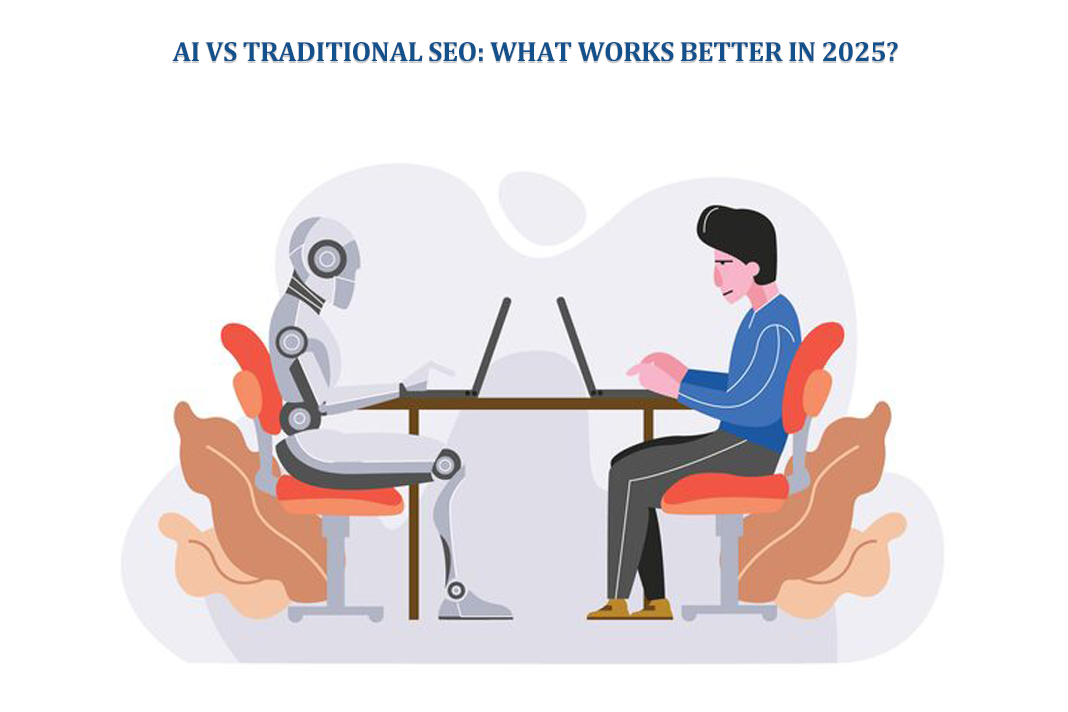
So, who wins? Let’s draw it plain.
-
- Content creation: Humans are slow. AI fast.
- Keywords: Traditional tools help, but AI predicts.
- Backlinks: Outreach is a human grind. AI makes it sharper, faster.
- User experience: Old SEO tweaks the design. AI personalizes in real time.
- Adaptability: Humans adjust after updates. AI adjusts while updates happen.
Looks like AI is crushing it. But wait. Not so simple.
Humans Still Matter
AI writes. But can it tell a story? Not really. It mimics. Copies. Predicts. But raw human emotion? That’s ours.
Readers know. They can smell it. AI can give structure, facts, and filler. But it lacks heart. It doesn’t laugh at its own mistakes. Doesn’t tell you about the time it almost gave up. That’s what sticks with people.
Brands are human. Voices are human. AI? It’s just the amplifier.
E-commerce in 2025
Let me tell you this. There’s a store owner. She sells handmade watches. For years, she used traditional SEO. Blog posts. Guest posts. Clean site structure. It worked—slow growth.
Then she tested AI. It scanned competitors. Found gaps. Suggested new keywords—even drafted ad copy. Suddenly, sales jumped. AI told her customers wanted pre-launch offers. She enabled WooCommerce pre-order on her site. Boom. Orders started pouring in before products even hit shelves.
Did AI replace her? No. It guided her. She still wrote the brand story. Still talked to customers. Still shaped the voice. AI just gave her sharper tools.
Trap of Full AI Dependence
Some businesses go all-in. Big mistake.
Here’s why:
-
- Content becomes soulless. Feels robotic.
- Sites get over-optimized. Users bounce.
- Strategy becomes lazy— “let the AI decide.”
- And worst, everyone using the same AI ends up sounding the same.
AI is a tool, not a crutch. Treat it like one.
Practical Tips for Today
- Fix your technical SEO.
Think of your site like a house. Broken doors? Cracked walls? Nobody stays. The same goes for slow load times, messy code, or missing mobile optimization. AI can guide you, sure. But if the foundation is weak, your rankings collapse. Run audits. Patch leaks. Speed it up. Make it crawlable. Only then can AI add magic on top.
- Use AI tools for research, but polish with your own voice.
AI can spit out hundreds of keywords. Write outlines in seconds. Even draft whole articles. But don’t just copy-paste. Readers crave personality. Add your quirks. Your tone. Your story. Let AI handle the heavy lifting, while you bring the sparkle that makes content alive.
- Don’t chase every trend. Stick to strategy.
Yes, AI shows you hot topics. Viral terms. Rising searches. But chasing every single one? Exhausting. And pointless. Trends fade fast. Strategy lasts. Build content that serves your brand, not just the latest hype. Let AI whisper suggestions, but you decide the path.
- Balance human storytelling with AI efficiency.
SEO isn’t just math. It’s art. People buy from stories. They remember emotions, not meta tags. AI is efficient, yes. But a machine can’t tell your childhood story about the first cookie you baked or the struggles you faced starting your business. That’s where you win. Use AI for structure. Use your voice for soul.
- Keep learning. Algorithms won’t stop changing. Neither should you.
Google updates. Bing experiments. AI evolves. If you stop adapting, you fall behind. Attend webinars. Read SEO blogs. Test new tools. Don’t just rely on what worked last year—it’s outdated already. Curiosity is survival in this game.
Looking Ahead
Five years from now? Hard to say. Maybe AI writes entire novels and wins awards. Perhaps search engines will become so smart, they don’t need “SEO” as we know it today. Maybe traditional SEO mutates into something unrecognizable.
But here’s the thing. People will always crave authenticity. A real story. A real voice. Machines can try, but they stumble on the heart. They miss nuance. They can’t laugh at themselves.
And that? That’s your edge. Keep your strategy alive. Use AI wisely. And remember—authenticity never goes out of style. Not now. Not ever.
Conclusion
So, AI or traditional SEO—which wins in 2025? Neither. Both.
AI brings speed, foresight, and personalization. Traditional SEO brings trust, credibility, and structure. Alone, each has weaknesses. Together, they’re unstoppable.
If you’re running a site, don’t pick sides. Blend them. Let AI handle the heavy lifting, and let human creativity tell the story. That’s the formula. That’s the future.
Because at the end of the day, SEO isn’t about machines. It’s about people searching, connecting, and finding answers. And people? They’ll always need the human touch.